
Orbital compute: why AI processing is moving into space
From edge AI modules on satellites to SpaceX's planned Starmind AI1 orbital data center, AI processing is moving off the ground and into orbit.
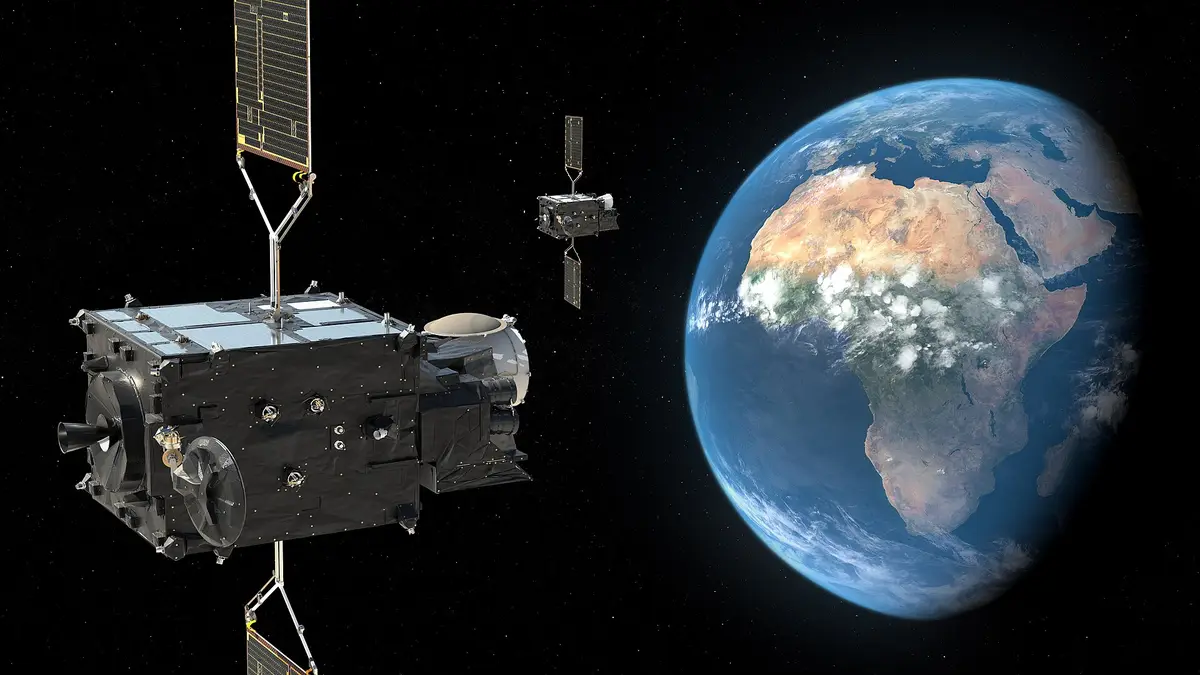
Satellites have long been data collectors that send raw imagery and signals down to Earth for processing. That model is changing. Space-based sensors now generate more data than can be economically downlinked, so the industry is moving AI inference, and eventually full data-center workloads, into orbit.
Edge AI on spacecraft today
NVIDIA describes "orbital compute" as GPU-accelerated processing aboard satellites in low Earth orbit. Running inference on board means only processed insights, not raw data, need to be transmitted, cutting downlink bandwidth and reducing latency "from hours to minutes," according to the company.
Its space lineup spans:
- Jetson Orin, a compact, energy-efficient module for onboard vision, navigation and sensor processing.
- IGX Thor, an industrial-grade platform for mission-critical edge environments.
- Space-1 Vera Rubin module, pitched as data-center-class compute for orbital data centers, with up to 25x more AI compute per GPU.
NVIDIA lists use cases including processing optical and infrared imagery in orbit for wildfire and infrastructure monitoring, onboard radar/SAR processing, and autonomous spacecraft operations. Companies it names as users include Axiom Space, Kepler Communications, Planet Labs, Sophia Space, Starcloud, Firefly Aerospace and EnduroSat.
From edge AI to orbital data centers
The bigger bet is putting data-center-scale compute in orbit. SpaceX's Starmind page describes AI1, a satellite with localized compute that uses solar power and radiative cooling, and beams results back to Earth over laser links to the Starlink constellation. Published specs:
| Spec | AI1 |
|---|---|
| Deployed height | 30 m |
| Wingspan | 75 m |
| Compute payload | Up to 250 kW peak / 175 kW average |
| Vehicle efficiency | 75 kW / ton |
SpaceX argues that sun-synchronous orbit offers continuous solar power, and that radiating heat into vacuum cuts cooling overhead "by an order of magnitude" compared with ground data centers. The company says its system is chip-vendor agnostic. NVIDIA, for its part, says the AI1 compute payload is powered by its Vera Rubin NVL72 architecture.
SpaceX says it is building a "Gigasat Factory" in Bastrop, Texas, intended to enable production of thousands of AI satellites starting as soon as late 2027. It names mass to orbit (Starship), power generation and AI chips as the three limiting factors.
What to watch
- Launch cadence and cost. Heavy compute satellites depend on reusable heavy-lift launch.
- Thermal and radiation reality. Claims about cooling and reliability will be tested only by flight hardware.
- Ecosystem breadth. Many satellite operators and bus makers are pre-integrating AI hardware, which suggests onboard processing is becoming standard rather than exotic.
These are company statements and plans, not yet demonstrated at scale in orbit.
Not financial advice.